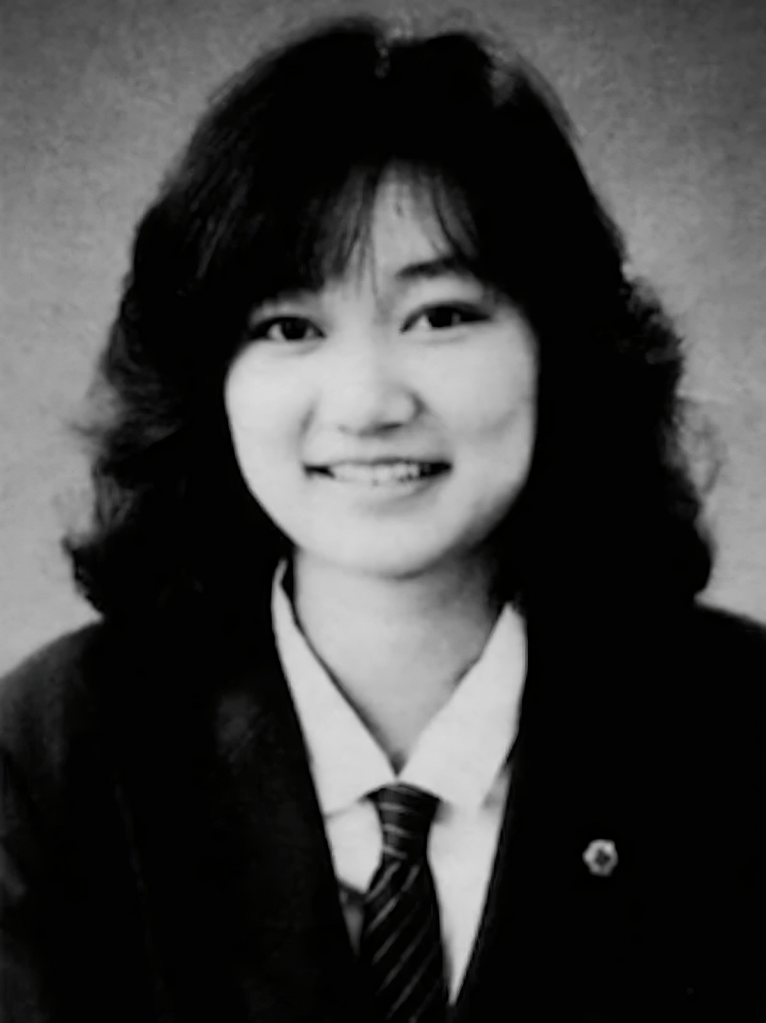
Junko Furuta was a 17-year-old Japanese high school student who was abducted, raped, tortured, and murdered.
I don’t usually preface these stories with a warning but this is such a truly horrific and extremely upsetting case so I feeI it’s best to do so:
WARNING: THE FOLLOWING STORY CONTAINS A LOT OF EXTREME TORTURE DETAIL.
Furuta was born on 18 January 1971 and grew up in Misato, Saitama Prefecture, Japan, where she lived with her parents, older brother, and younger brother. At the time of her murder, she was a 17-year-old senior at Yashio-Minami High School (She was less than 5 months away from graduating school at that time) and was known to be a good student with good grades and very few absences. At school, she was very popular and was considered very pretty. Furuta worked a part-time job at a plastic molding factory from October 1988 to save up money for a planned graduation trip. She also accepted a job at an electronics retailer, where she planned on working after graduation. According to her friends, she dreamed of becoming a singer.

The perpetrators of the crime were four male teenagers: Hiroshi Miyano (18 years old), Jō Ogura (17 years old), Shinji Minato (16 years old), and Yasushi Watanabe (17 years old), who in court documents were referred to as “A”, “B”, “C”, and “D”, respectively. Two others, Tetsuo Nakamura and Koichi Ihara, were referred to as “G” and “L”. Miyano had a history of problematic behaviour since he was a young child, such as shoplifting and damaging school property, and continued committing crimes through the following years. At the time of Junko’s murder, Miyato was living with his girlfriend, who was the older sister of Yasushi Watanabe. However, Miyano ended up joining a gang and started committing sex crimes, which caused his girlfriend to end their relationship.
The four members of the group had all dropped out of high school in summer 1988, and became involved in organized crime as chinpira (low-ranking yakuza). They began using Minato’s family home in Adachi, Tokyo, as a hangout. Beginning in October, they engaged in various crimes including theft (purse snatching and car theft), assault, and rape. On 8 November, the group abducted a 19-year-old woman in Adachi and gang raped her in a hotel there. On 27 December, during Furuta’s confinement, the group abducted another 19-year-old woman in Adachi and gang raped her in a motel. The girl never reported it as she knew about their ties to the Yakuza and was terrified of what could happen to her and her family if she told.

On the evening of 25 November 1988, Miyano and Minato rode around Misato on their motorcycles with the intention of robbing and raping local women, and spotted Furuta, who was on her way home from her part-time job. Acting on Miyano’s orders, Minato kicked Furuta off her bicycle and fled the scene. Miyano, under the pretense of witnessing the attack by coincidence, approached Furuta and offered to walk her home. Upon tricking her and gaining her trust, Miyano took Furuta to a nearby warehouse and threatened her, claiming to be a member of the Yakuza and saying that he would spare her only if she followed his orders and proceeded to rape her.
Later that night, Miyano took Furuta by taxi to a hotel in Adachi, where he again raped her. He later called Minato’s house and bragged to Ogura about the rape, after which Ogura told him not to let Furuta leave. In the early morning hours of 26 November, Miyano took Furuta to a park near the hotel, where Ogura, Minato, and Watanabe were waiting. They told her they knew where she lived, and that the Yakuza would kill her family if she attempted to escape. Minato agreed to allow Furuta to be confined in a room on the second floor of his house in Adachi for the purpose of gang raping her. Furuta was held captive for the next 39 days.
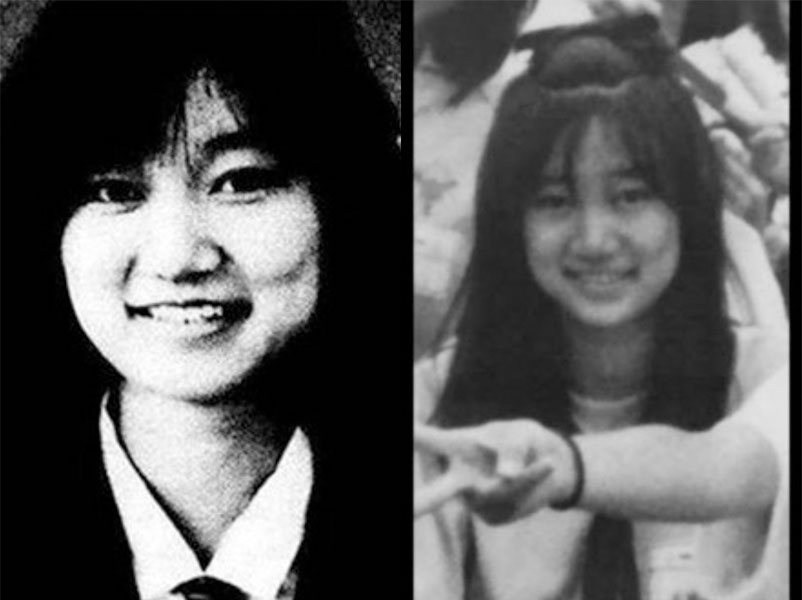
On 27 November, Furuta’s parents contacted the police about her disappearance. To discourage further investigation, the kidnappers forced Furuta to call her mother three times to convince her that she had run away but was safe and staying with friends. When Minato’s parents were present at the house where she was being confined, Furuta was forced to act as his girlfriend. The group dropped this pretense when it became clear that Minato’s parents would not report them to the police, and they later claimed that they did not intervene because they were afraid of their own son, who had been increasingly violent toward them. On the night of November 28th, they invited two other boys, Tetsuo Nakumara and Koichi Ihara to the home. They went upstairs where Junko was sitting and the group drank cough medicine, pretending it was drugs, and acted high. Junko was screaming in fear and tried to run away, but was ultimately stopped. Hearing the commotion, Minato’s mother went to check on the boys, and they told her they were just messing around and everything was fine and she left. Miyano and the others, along with Nakamura and Ihara, gang raped Furuta, after which Miyano shaved her pubic hair with a razor and used a match to burn her genital area. They would also mentally abuse her by telling her that her father died in an accident.
In early December, as punishment for an escape attempt, the group repeatedly punched Furuta in the face, and Miyano burned her ankles with a lighter. They forced Furuta to dance to music while naked, masturbate in front of them, and stand on the balcony in the middle of the night with little clothing (during Winter). They inserted objects into her vagina, anus and ears, including a metal rod, a glass bottle, skewers, scissors, cigarettes and lit fireworks. Her hands were smashed by weights and fingernails cracked and fed cockroaches. They beat her with golf clubs, metal rods, bamboo sticks and had her head held against concrete ground and jumped on. She was stabbed with sewing needles in chest area and had her left nipple pulled off with pliers. They also forced her to drink large amounts of alcohol, milk, and water and urine; smoke multiple cigarettes at once; and inhale paint thinner fumes. There came a point where she was so injured and so sick, that she couldn’t even keep water down, she would instantly throw it up. In one attack in the middle of the month, Furuta was beaten by the group on the pretext that Miyano had stepped on a puddle of her spilled urine, after which he burned her thighs and hands several times with lighter fluid. From around this time, Furuta, unable to bear the repeated assaults, would sometimes plead to be killed by her captors.
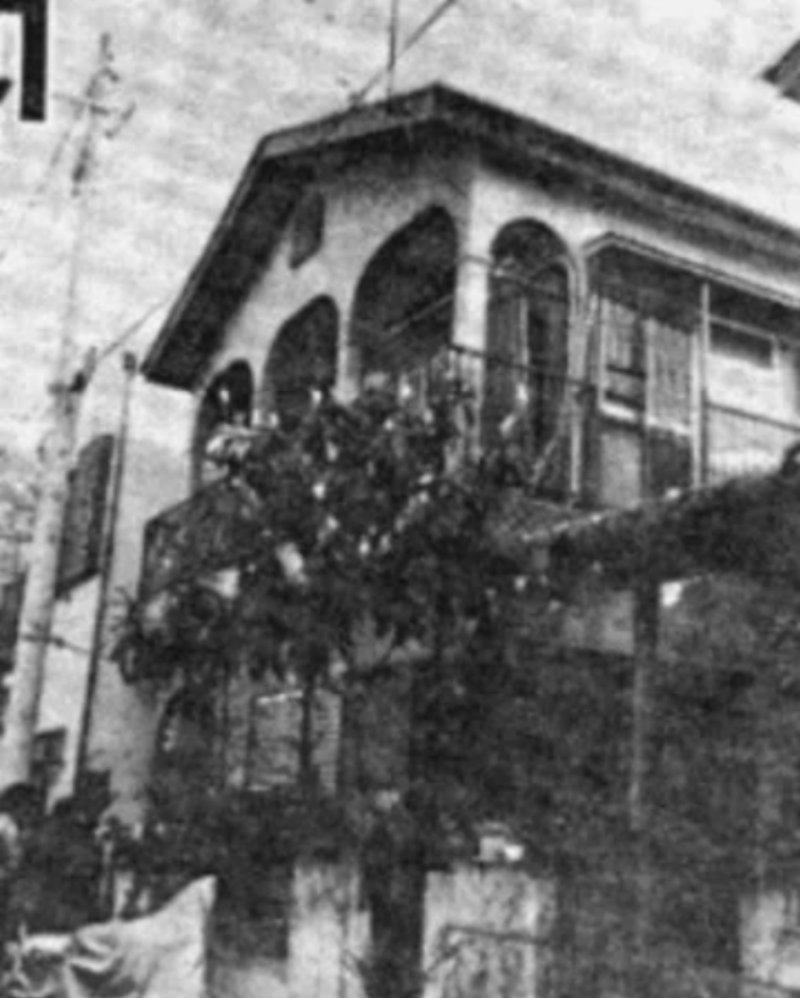
By the end of December, Furuta was severely malnourished after being fed only small amounts of food and eventually only milk. She had extreme injuries and horrible infections and could no longer even walk up and down the stairs to use the bathroom, and became solely confined to the bedroom and in a state of extreme physical and mental weakness, she lost full control of her bladder and bowels. Her appearance had been drastically altered after repeated beatings, with her face becoming so swollen that it was difficult to recognize her. Her nasal cavity was full of blood, and her brain had even shrunk from the damage. She was so beaten and sick that she lost all her beauty, and her body even started giving off a rotting smell, which eventually made the boys lose interest in her (his is said to be the reason they kidnapped and gangraped another 19 year old woman who was released afterwards). At one point she had managed to sneak a phone call to the police, but was caught before she could say anything. As a punishment, she was again, severely beaten. She would even beg them to just kill her, but they always refused.
On 4 January 1989, after losing money in a game of Mahjong the night before, Miyano decided to take his anger out on Furuta. He ignited a candle and dripped hot wax on her face, placed two shortened candles on her eyelids, and forced her to drink her own urine. Furuta was lifted and kicked, fell onto a stereo unit, and began a fit of convulsions. To prevent them from being stained with blood, the group covered their hands in plastic bags before beating her with their fists and an iron exercise ball, and dropped the ball on her abdomen several times. Miyano poured lighter fluid on Furuta and set her on fire; she made weak attempts to put herself out, but eventually stopped moving. The assault lasted for about two hours, after which Furuta died at 10 A.M.

Less than 24 hours after her death, Minato’s brother called to tell him that Furuta appeared to be dead. Afraid that their crime would be discovered, the group wrapped Furuta’s body in a blanket and placed it in a large travel bag, then put the bag in a 55-Gallon metal drum and filled it with wet concrete. At around 8:00 P.M. on 5 January, the group drove to a vacant lot near a construction site on the island of Wakasu in Kōtō, Tokyo, and dumped the drum there. During her captivity, Junko had mentioned that she had regretted not watching the last episode of “Tonbo” (“Dragonfly”), so Minyano found the video tape of the last episode and placed it in the travel bag. He claimed that he didn’t do this because he pitied Junko, but because he didn’t want her to return as a ghost and haunt him.
On January 23rd, 1989, Miyano and Ogura were arrested for the gangrape of a 19 year old girl who they had kidnapped in December. On March 29th, two police officers came to question them, as womens underwear had been found at their addresses. When police interrogated Miyano, he falsely believed that Ogura had already confessed to Furuta’s murder and that the police were aware of his culpability, so he told them where to find her body. The police were initially puzzled by his confession, as they were questioning him about the murder of a different woman and her seven-year-old son which had occurred nine days prior to Furuta’s abduction, a case which remains unsolved. The drum containing Furuta’s body was recovered on 29 March, and she was identified via fingerprints, her body weighed just 44kg when found. On April 1st, 1989, Ogura was arrested for another sexual assault, and was subsequently arrested for Junko’s murder. The arrest of Minato and Watanabe, along with Minato’s brother all followed. Several other people who had participated in the abuse and rape were also identified, including Tetsuo Nakamura and Koichi Ihara, who were all charged with rape after their DNA was found on and inside of Junko.
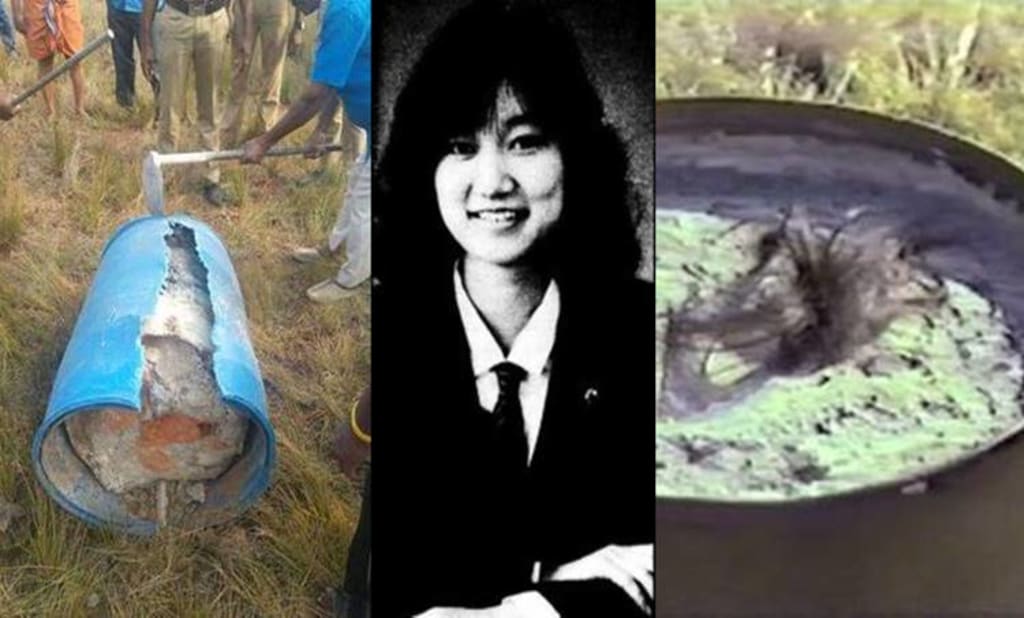
The identities of the defendants were sealed by the court, as they were all juveniles under the age of 20 (Though Junko’s identity was revealed along with multiple pictures of her). Journalists from the Shūkan Bunshun tabloid uncovered their identities and published them, arguing that the accused did not deserve to have their right to anonymity upheld, given the severity of the crime (“Beasts have no human rights”). All four defendants plead guilty to “committing bodily injury that resulted in death,” rather than murder. In July 1990, all were found guilty and sentenced by the Tokyo District Court for abduction for the purpose of sexual assault, confinement, rape, assault, murder, and abandonment of a corpse. All four appealed; in July 1991, three were re-sentenced to longer terms by the Tokyo High Court.
Hiroshi Miyano was originally sentenced to 17 years in prison, and re-sentenced to 20 years in Chiba prison, the longest sentence typically given in Japan short of life imprisonment, which had been sought by the prosecution. Miyano’s parents sold their family home and paid Furuta’s parents ¥50 Million (about US$350,000; $800,000 today) in compensation, which their son’s defense presented as a mitigating circumstance. A court-ordered psychological evaluation at the trial established that Miyano had a learning disability that “did not impair his brain function, but delayed his emotional development”.

Author Mr. Kanehara wrote a book called “1000 Murderers Who Spent Time with Me”. Mr. Kanehara met Miyano in a poetry club and wrote about him in four pages. According to him, Miyano was known because of the murder of Junko Furuta. However, Kanehara was surprised since Miyano befriended everyone and described him as cheerful. Kanehara played board games such as Go and Shogi with him. Miyano had connections to a former Yakuza leader who loved him. Miyano was denied parole in 2004 and wrote a poem about how sad he was. In 2009, Miyano got released from prison. After his release in 2009, he changed his last name to “Yokoyama”. A magazine article about his life after the incident was published. The man who knew Miyano was interviewed:
“When I heard the rumour, I couldn’t believe it. So I asked him over a drink: ‘The stuff about you being one of the perpetrators of the concrete-encased high school murder case is a lie, right?’ His facial expression suddenly stopped and turned pale. The next day, I stopped receiving any contact from him, even though I had been spending almost every day with him. I could have never envisioned myself being so close to such a brutal criminal. But in retrospect, realizing he was one of the main perpetrators isn’t that surprising. He was always talking about judo or sex, and would brag about how when having sex with women how he ‘stuck it in her mouth so far she threw up.’ He also talked about how much he liked choking women during sex.”
He reportedly boasted about his Yakuza connections and involvement in pyramid schemes. In 2013, Miyano was arrested on suspicion of bank fraud and placing scam telephone calls, but remained silent and was not charged.

Jō Ogura (who was born with 6 fingers) was sentenced to five to ten years in prison. During the trial, he testified in tears:“I have no way to apologize to her for the rest of my life. I’m going to atone for the crime for the rest of my life.” He was released in 1999, and changed his last name to “Kamisaku”. He worked in IT jobs after his release, but turned to organized crime after his past became known to those around him. in July of 2004, Ogura was arrested for assaulting Takatoshi Isono, who was an acquaintance he thought his girlfriend may have been involved with. He racked Isono down, beat him, and shoved him into his truck, drove to his mother’s bar in Misato, where he assaulted him for four hours. During that time, Ogura repeatedly threatened to kill the man, telling him that he had killed before and knew how to get away with it. He was sentenced to seven years in prison for assaulting Isono and has since been released. Ogura’s mother allegedly vandalized Junko’s grave, stating that she had been the reason her son’s life was ruined.
Shinji Minato was originally sentenced to five to six years in prison, and re-sentenced to five to nine years. His parents and brother were not charged. After his release in 1998, Minato moved in with his mother. He apparently married a woman from Liechtenstein in the 2000s and has a daughter with her. They got divorced due to domestic violence and she took full custody of the child. He has a Twitter account the public knows about. On Twitter, he claimed that the murder was “a shameful incident in his boyhood” and that his parents were to blame. In 2018, Minato (then unemployed) was arrested on suspicion of attempted murder after striking a 32-year-old man in the shoulder with a metal baton and slashing his neck with a knife on a street in Kawaguchi, Saitama, during a dispute over a vehicle parking spot. In 2019, Minato was sentenced to one year and six months in prison, suspended with probation for three years. Yasushi Watanabe was originally sentenced to three to four years in prison, and re-sentenced to five to seven years. He further appealed the verdict to the Supreme Court of Japan, but his appeal was denied in July 1992. He was released in 1996, and left his hometown to live with his mother. He is said to be a social outsider and is the only one who didn’t reoffend.
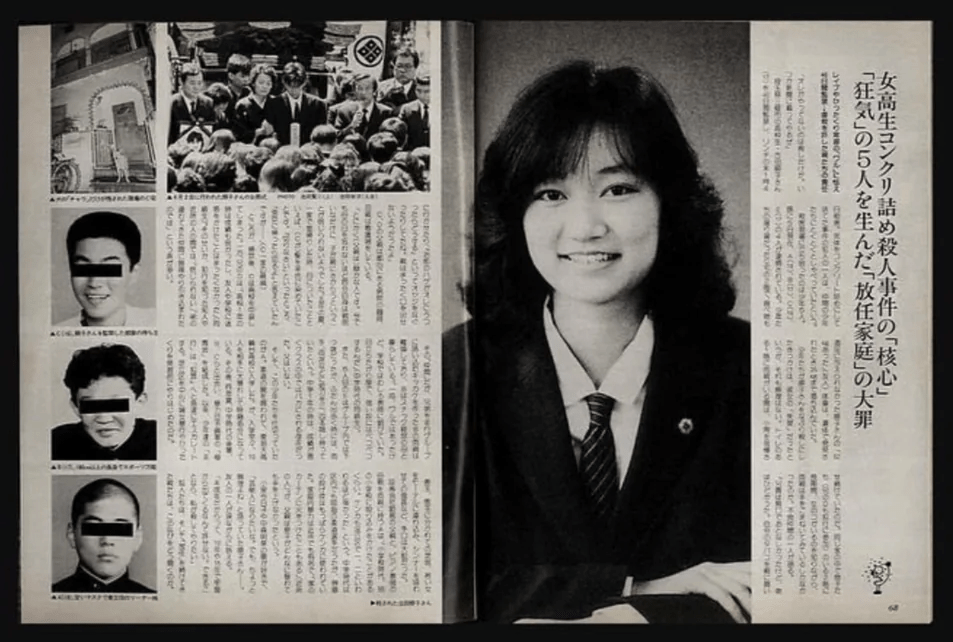
From the time the case was first reported in the media, the Tokyo Metropolitan Police Department, the investigating body, received many calls and letters from the general public demanding that the perpetrators be severely punished, including by life imprisonment or with the death penalty. The Tokyo Public Prosecutors Office, which had sought life imprisonment for Miyano during the trial, was criticized for not seeking life sentences for the other perpetrators, nor seeking the death penalty. The Tokyo District Court also received numerous calls and letters which criticized the perceived lightness of its sentencing, though a majority of legal professionals surveyed by the Asahi Shimbun newspaper said that the sentences were appropriate based on precedent.
In the trial for the 1988 “Nagoya couple murder case”, the Nagoya District Court sentenced the main defendant, a 19-year-old boy, to death in June 1989, and a second defendant, a 17-year-old boy, to life imprisonment; this case drew comparisons to the Furuta case. Hiroshi Itakura, a professor of law at Nihon University, commented that the difference in sentencing was explained by the difference in the number of victims (two in the Nagoya case, versus one in the Furuta case): under the Nagayama standard, the legal standard used in Japan for the death penalty, one murder victim means life imprisonment or less is given, while two victims is considered a borderline case. Itakura also stated that the prosecution in the Nagoya case had demonstrated clear intent and premeditation, while in the Furuta case, the intent to murder was more unclear.
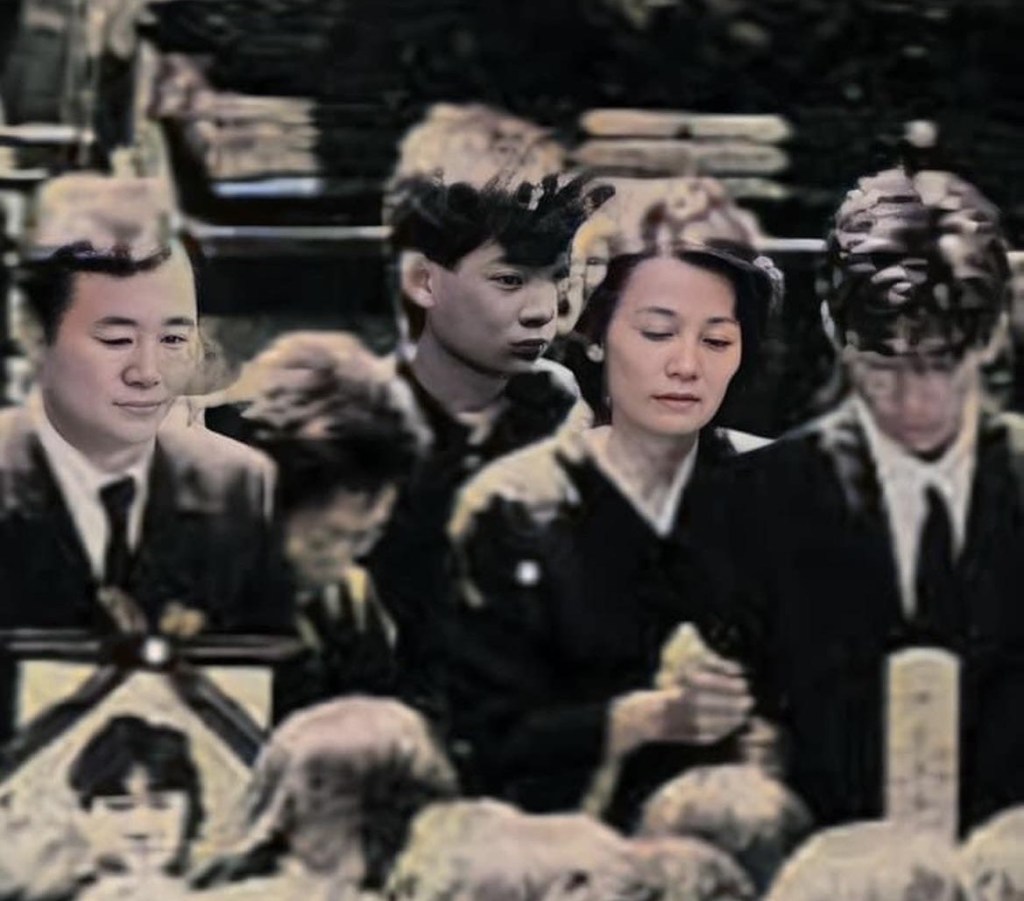
Furuta’s funeral was held on 2 April 1989. During the ceremony, one of her friends delivered a eulogy written by her high school classmates which stated:
“Jun-chan, welcome back. I never dreamed we would meet again like this. You were subjected to such cruelty, weren’t you? You went through so much, didn’t you? I’m upset with myself that I went on living, unaware of what was happening. You were always so gentle and cheerful, Jun-chan. The happi we made for the cultural festival looked wonderful on you. I’ll never forget that. We will absolutely not let Jun-chan’s death be in vain. As we step into adulthood, we’ll strive for a world where such heinous crimes no longer exist. We’ll do our best, keeping Jun-chan in our hearts and pushing forward. The principal even brought your diploma. Thanks to this, all 47 of us in Class 3-8 were able to graduate. Jun-chan… there’s no more pain or suffering now. Rest peacefully. Farewell, Jun-chan.”
Furuta’s intended future employer presented her parents with the uniform she would have worn in her position, and it was placed in her casket. One of the culprits asked if he could speak to the Furuta family or visit Junko’s grave. The family refused that request and did not want to talk to the culprits nor to their families. At her graduation, the principal presented her parents with her diploma. The location on Wakasu where her body was discovered is now an industrial zone. Junko’s mother had to be admitted to a psychiatric hospital after finding out what happened to her daughter. It was too much pain for her to handle. Aside from a civil court case by Junko’s parents against Jo Kamikasu’s parents, which Junko’s parents won, it doesn’t appear that there were any criminal sentences successfully rendered against Jo’s parents. As is the case with trials of minors in Japan, virtually everything is sealed.
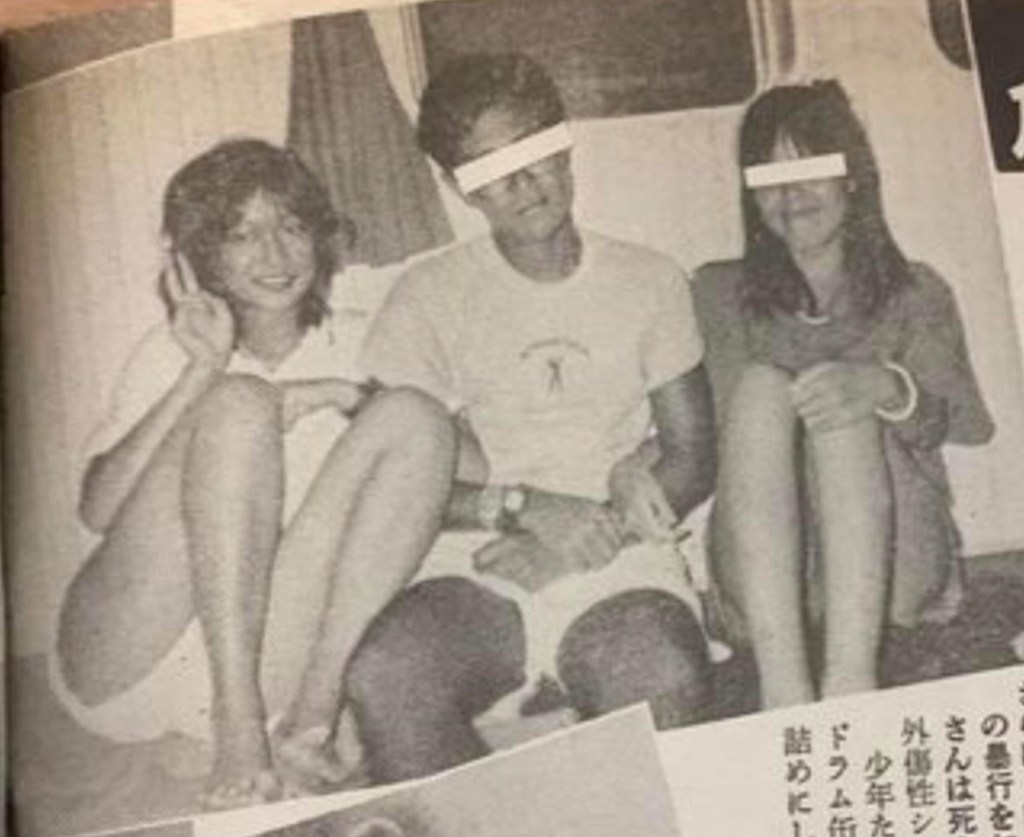
A lesser known fact about Furuta was that she had a boyfriend at that time. Her boyfriend’s pseudonym was Kawamura. He was 23 years old at that time and worked as a construction worker. He and Junko met through a mutual friend in 1987 and started dating. On Valentine’s Day (February 1988), Junko gifted him homemade chocolate which is a tradition in Japan. He gifted her an 18K gold necklace she wore dutifully. On 23rd November 1988, it was Kawamura’s birthday. On that day, Junko asked him to “please wear this” and gave him a black hand-knitted sweater. They went bowling that day and had also planned to go skiing in the winter. Unfortunately, two days after Kawamura’s birthday, Junko Furuta would get kidnapped. Her boyfriend didn’t attend her funeral. He grieved at the spot she was found. He started to drink heavily and smoke again. When he was in a relationship with Junko, he quit because she wanted him to do so. It seems that she had a good influence on people. He said about the perpetrators: “I remember their faces, and when they come out, I want to kill them in the same eye!!”
Junko was described as very kind, as she would bring her friend’s families a gift as a token of appreciation. She grew up in a healthy family and was known to be a family lover who always helped her mother with housework. She would always greet her neighbours politely. Her hobbies were baking and knitting. She also loved going to the beach. Her boyfriend said that she baked him a cheesecake he found delicious. She was not a delinquent or a bad girl, as some of the media had stated.

“At the time the defendants were arrested, I was in a state of mind like ‘I don’t know what I will do to them’ and ‘I want to kill them with my hands’. That hasn’t changed even now.” – Junko Furuta’s Father at the trial
If you want to watch a documentary on the murder of Junko Furuta then just check out the video below:
 Raz's Midnight Macabre
Thank you for this detailed blog post. Such a horrific crim and nobody who reads this can come away not deeply affected. Poor girl, I hope she is resting in eternal peace
LikeLike
It truly was and continues to be shocking that this happened.
LikeLike