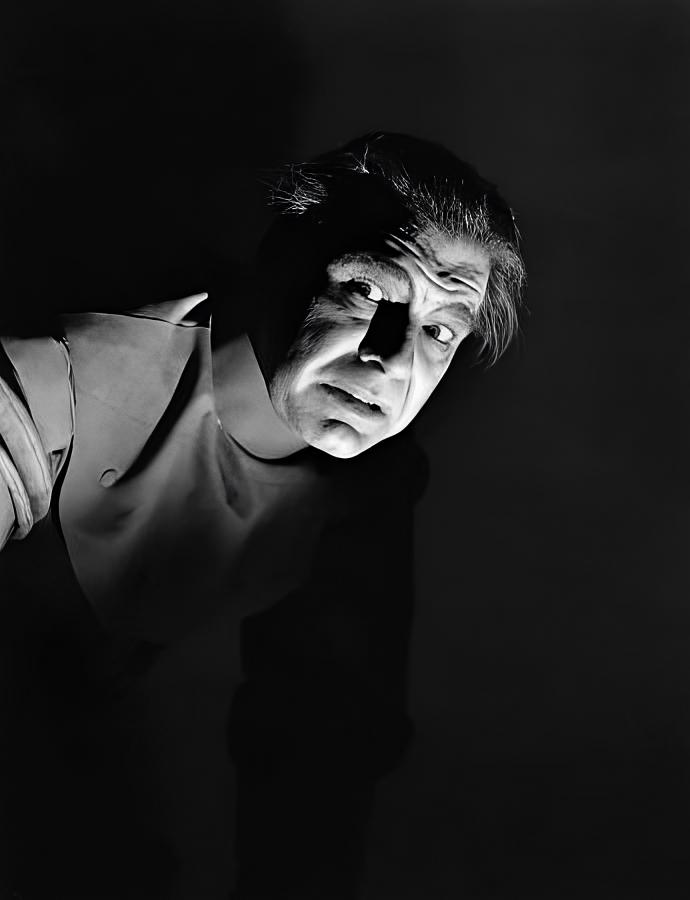
That’s right, this month the legendary Lon Chaney, Jr, is my icon of the month.
Creighton Tull Chaney was born in Oklahoma City, Oklahoma in 1906, the son of silent film star Lon Chaney and Frances Cleveland Creighton Chaney, a singing stage performer who travelled in road shows across the country with Creighton. In a 1965 interview, Chaney Jr. revealed that he was a stillborn baby. “I was all black and not breathing when I was born,” he shared. “My father ran out of the house with me and broke a hole in the ice in a nearby lake, and dunked me in time after time until he revived me” The younger Chaney was born while his parents were on a theatrical tour, and he joined them onstage for the first time at the age of six months. His parents’ troubled marriage ended in divorce in 1913 following his mother’s scandalous public suicide attempt in Los Angeles. Young Creighton lived in various homes and boarding schools until 1916, when his father (now employed in films) married Hazel Hastings and could provide a stable home.
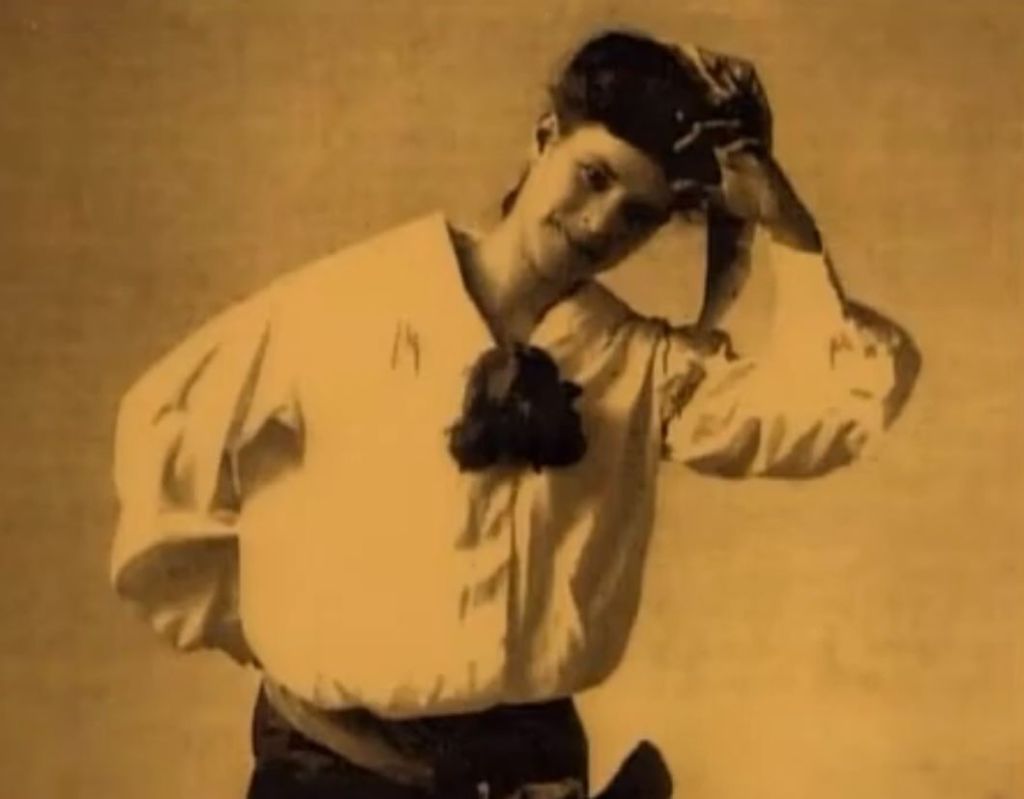
Many articles and biographies over the years report that Creighton was led to believe his mother had died while he was a boy, and was only made aware she lived after his father’s death in 1930. Lon always maintained he had a tough childhood. As a young man, even during the time of his father’s growing fame, Creighton Chaney worked menial jobs to support himself without calling upon his father. From an early age, he worked hard to get out of his famous father’s shadow. In young adulthood, his father discouraged him from show business, and he attended business college and became successful in a Los Angeles appliance corporation.
He was at various times a plumber, a meatcutter’s apprentice, a metal worker, and a farm worker. Always, however, there was the desire to follow in his father’s footsteps. He studied makeup at his father’s side, learning many of the techniques that had made his father famous. And he took stage roles in stock companies. It was only after his father’s death at the young age of 47 from throat cancer that Chaney started acting in movies, he signed a contract with RKO and starred in an uncredited role in the 1932 film “Girl Crazy”, then “Bird Of Paradise” (1932), and “The Most Dangerous Game” (1932) (from which Chaney’s few scenes were edited out before the film was released). His first appearances were under his real name.

RKO gave him the starring role in a serial, “The Last Frontier” (1932). He got bigger film roles in “Lucky Devils” (1933), “Son Of The Border” (1933), “Scarlet River” (1933), and “The Life Of Vergie Winters” (1934). He also supported John Wayne in a serial, “The Three Musketeers” (1933), which was later re-edited into a film entitled “Desert Command” (1946).“I did every possible bit in pictures” said Chaney later. “Had to do stuntwork to live. I bulldogged steers, fell off and got knocked off cliffs, rode horses off precipices into rivers, drove prairie schooners up and down hills.” He had the lead in the independent film “Sixteen Fathoms Deep” (1934), and a memorable part in which his character sings in “Girl o’ My Dreams” (1934). The last film he made as Creighton Chaney was “The Marriage Bargain” (1935) for Screencraft Productions. After this point he was billed as Lon Chaney, Jr. until 1942, when he was usually billed, at the insistence of Universal Studios, with his iconic father’s name, although the “Jr.” was usually added by others to distinguish the two. Chaney was uncomfortable with the ploy and always hated the “Jr”. addendum. But he was also aware that the famous name could help his career, and so he kept it, it was eventually shortened to, simply, Lon Chaney.
Most of the parts he played were unmemorable, often bits, until 1939 when he was given the role of the simple-minded Lennie in the film adaptation of John Steinbeck’s “Of Mice And Men” (1939) he achieved critical acclaim. Chaney was also asked to test for the role of ‘Quasimodo’ for the 1939 remake of “The Hunchback Of Notre Dame”, a role which his father played back in 1923, but the role went to Charles Laughton. With his third-billed character role in “One Million B.C.” (1940) as Victor Mature’s caveman father, Chaney began to be viewed as a character actor in the mould of his father. He had in fact designed a swarthy, ape-like Neanderthal make-up on himself for the film, but production decisions and union rules prevented his following through on emulating his father in that fashion.

Universal Pictures offered Chaney Jr the lead in “Man-Made Monster” (1941), a science-fiction horror thriller originally written with Boris Karloff in mind. Chaney’s first horror film, it was successful enough for them to offer him a long-term contract. Universal kept him in supporting roles for a while: a comedy “Too Many Blondes” (1941), a musical “San Antonio Rose” (1941) with Shemp Howard, a serial “Riders Of Death Valley” (1941) featuring Noah Beery Jr., “The Western Badlands Of Dakota” (1941) and the “Northern” “North To The Klondike” (1942) with Broderick Crawford. Universal, in hopes of reviving their horror film franchise as well as memories of their great silent star, Chaney Sr, cast Chaney as the tortured ‘Lawrence Talbot’ in “The Wolf Man” (1941). It became Chaney’s signature role, a role which would typecast him for the rest of his life.
Chaney Jr. was now an official horror star. He maintained a career at Universal horror movies over the next few years, replaying ‘The ‘Wolf Man’ in “Frankenstein Meets The Wolf Man” (1943) (with Bela Lugosi as ‘Frankenstein’s Monster’. The film was originally filmed with ‘The Monster’ being blind and speaking in Lugosi’s distinctive ‘Ygor’ voice, but the studio cut out all references to either so that audiences were left wondering why ‘The Monster’ staggered around with his arms extended in front of him, not to mention why he had lost the ability to speak since “Ghost Of Frankenstein”, grievously damaging Lugosi’s reputation.), “House Of Frankenstein” (1944), “House Of Dracula” (1945) and “Abbott And Costello Meet Frankenstein” (1948); playing ‘Frankenstein’s Monster’ (Boris Karloff decided not to play the part again) in “The Ghost Of Frankenstein” (1942) and playing ‘Kharis The Mummy’ in “The Mummy’s Tomb” (1942), “The Mummy’s Ghost” (1944) and “The Mummy’s Curse” (1944). He also played the title character in “Son Of Dracula” (1943). Chaney is thus the only actor to portray all four of Universal’s major horror characters: ‘The Wolf Man’, ‘Frankenstein’s Monster’, ‘The ‘Mummy’, and the vampire son of ‘Count Dracula’.

Universal also starred him in a series of psychological mysteries associated with the Inner Sanctum radio series. He also played western heroes such as in the serial “Overland Mail”, despite being typecast as ‘The Wolf Man’, the 6-foot 2-inch, 220-pound actor managed to carve out a secondary niche as a supporting actor and villain. After leaving Universal where he made 30 films, he worked primarily in character roles in notable films such as “High Noon” and “Casanova’s Big Night” and in more prominent roles in lower-budget films and television shows. He also appeared in such stage productions as “Born Yesterday” in the role ‘Broderick Crawford’.
In April 1948 Chaney was hospitalized after taking an overdose of sleeping pills. Chaney established himself as a favourite of producer Stanley Kramer; in addition to playing a key supporting role in “High Noon” (1952), he also appeared in “Not As A Stranger” (1955) – a hospital melodrama featuring Robert Mitchum and Frank Sinatra, “The Defiant Ones” (1958, starring Tony Curtis and Sidney Poitier). Kramer told the press at the time that whenever a script came in with a role too difficult for most actors in Hollywood, he called Chaney.

One of his most legendary roles was a live television version of ‘Frankenstein’ on the anthology series “Tales Of Tomorrow” for which he allegedly showed up drunk. During the live broadcast, Chaney, playing the ‘Monster’, apparently thought it was just a rehearsal and he would pick up furniture that he was supposed to break, only to gingerly put it back down while muttering, “I saved it for you.”
He became quite popular with baby boomers after Universal released its back catalogue of horror films to television in 1957 (Shock Theater) and Famous Monsters of Filmland magazine regularly focused on his films. In 1957, Chaney went to Ontario, Canada, to co-star in the first ever American-Canadian television production, as Chingachgook in “Hawkeye” and “The Last Of The Mohicans”, suggested by James Fenimore Cooper’s stories. The series ended after 39 episodes. That same year, Universal released the popular film biography of his father, “Man Of A Thousand Faces”, featuring a semi-fictionalized version of Creighton’s life story from his birth up until his father’s death. Roger Smith played the young Creighton. He appeared in a 1958 episode of the western series “Tombstone Territory” titled “The Black Marshal from Deadwood”, and appeared in westerns such as “Rawhide”. He also hosted the 13-episode television anthology series “13 Demon Street” in 1959, which was created by Curt Siodmak.

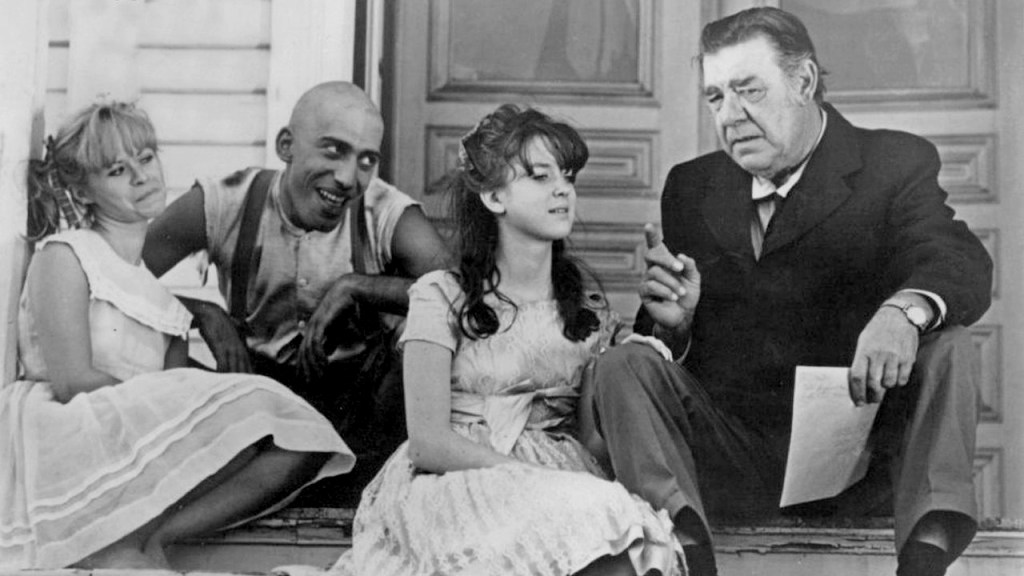
In the 1960’s, Chaney’s career ran the gamut from horror productions such as Roger Corman’s “The Haunted Palace” and big-studio Westerns such as “Welcome To Hard Times”, to such low budget productions as “Hillbillys In A Haunted House” and “Dr. Terror’s Gallery Of Horrors” (both 1967). His bread-and-butter work during this decade was television – where he made guest appearances on everything from “Wagon Train” to “The Monkees” and in a string of supporting roles in low-budget Westerns produced by A. C. Lyles for Paramount. In 1962 Chaney got a brief chance to play ‘Quasimodo’ in a simulacrum of his father’s make-up, as well as return to his roles of ‘The Mummy’ and ‘The Wolf Man’ on the television series “Route 66” with friends Boris Karloff and Peter Lorre. During this era, he starred in Jack Hill’s “Spider Baby” (filmed 1964, released 1968), for which he also sang the title song.
In later years he battled throat cancer and chronic heart disease among other aliments after decades of heavy drinking and smoking. In his final horror film, “Dracula vs. Frankenstein” (1971), directed by Al Adamson, he played Groton, Dr. Frankenstein’s mute henchman. He filmed his part in the spring of 1969, and shortly thereafter performed his final film role, also for Adamson in “The Female Bunch”. Chaney had lines in “The Female Bunch” but his hoarse, raspy voice was virtually unrecognizable. Due to illness he retired from acting to concentrate on a book about the Chaney family legacy, “A Century Of Chaneys”, which remains to date unpublished in any form. His grandson, Ron Chaney, was working on completing this project.
Chaney suffered from a series of illnesses in the year prior to his death. In April 1973, he was released from the hospital after undergoing surgery for cataracts and treatment for beriberi. He also suffered from liver problems and gout. Chaney died on July 12, 1973, in San Clemente, California, at the age of 67. His cause of death was not immediately released to the public. Chaney’s death certificate listed his cause of death as cardiac failure due to arteriosclerotic heart disease and cardiomyopathy.
Chaney’s corpse was dissected by medical students, and the medical school kept his liver and lungs in jars as specimens of what extreme alcohol and tobacco abuse can do to human organs. There is no grave to mark his final resting place. Married twice, Chaney had two sons, Lon Ralph Chaney (born July 3, 1928) and Ronald Creighton Chaney (born March 18, 1930), both now deceased. He is survived by a grandson, Ron Chaney, who attends film conventions and discusses his grandfather’s life and film career.

Chaney was well liked by some co-workers – “sweet” is the adjective that most commonly emerges from those who acted with, and liked him – yet he was capable of intense dislikes. For instance, he and frequent co-star Evelyn Ankers did not get along at all despite their on-camera chemistry. He was also known to befriend younger actors and stand up for older ones who Chaney felt were belittled by the studios. One example was that of William Farnum, a silent star who played a bit part in “The Mummy’s Curse”. According to co-star Peter Coe, Chaney demanded that Farnum be given his own chair on the set and be treated with respect, or else he would walk off the picture.
Chaney is said to have had a belligerent relationship with actor Martin Kosleck; years after the fact, Kosleck explained this as a case of jealousy over Kosleck’s (self-described) superior talent. Chaney also had run-ins with actor Frank Reicher (whom he nearly strangled on camera in “The Mummy’s Ghost”) and director Robert Siodmak (over whose head Chaney broke a vase). Actor Robert Stack claimed in his 1980 biography that Chaney and drinking buddy Broderick Crawford were known as “the monsters” around the Universal Pictures lot because of their drunken behavior that frequently resulted in bloodshed.

“Nothing is more natural to me than horror.” – Lon Chaney, Jr.
 Raz's Midnight Macabre