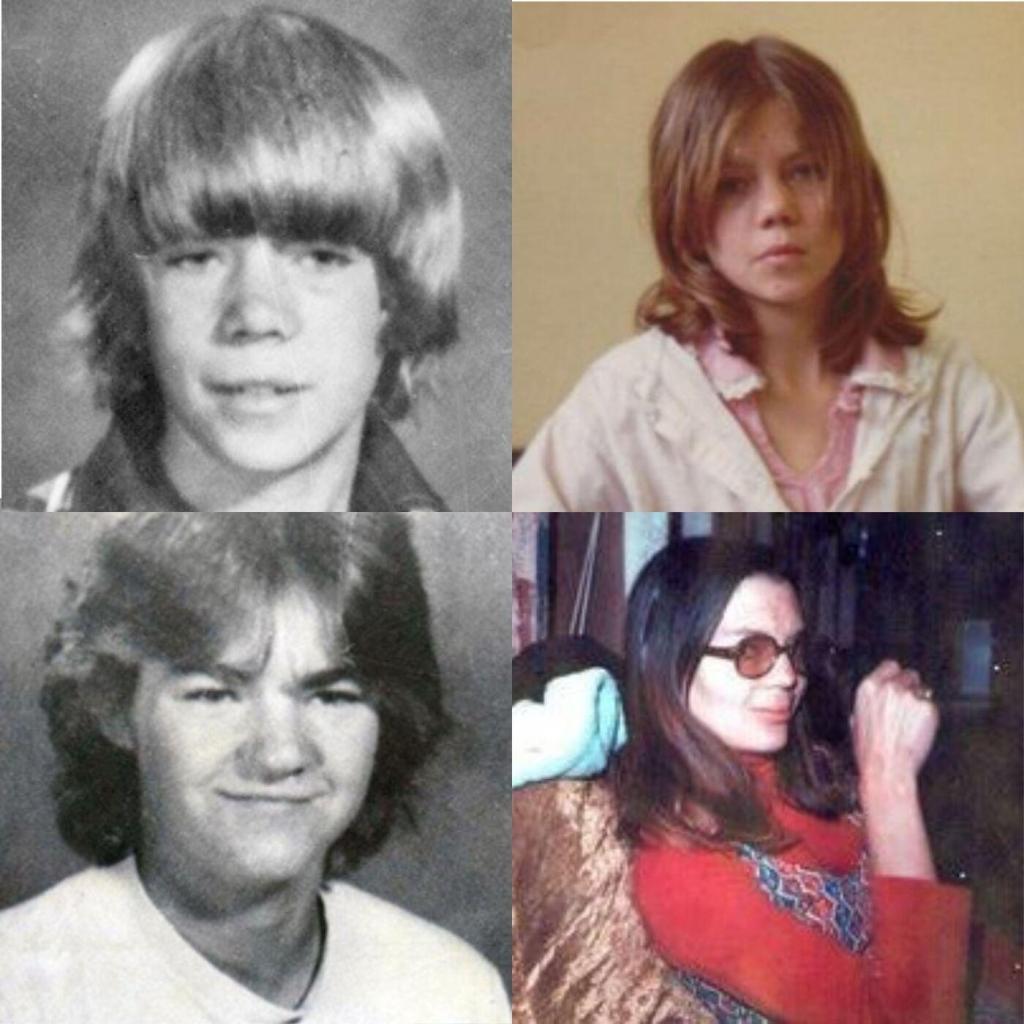
The Keddie murders are an unsolved quadruple homicide that occurred over the night of April 11–12, 1981 in Keddie, California, United States.
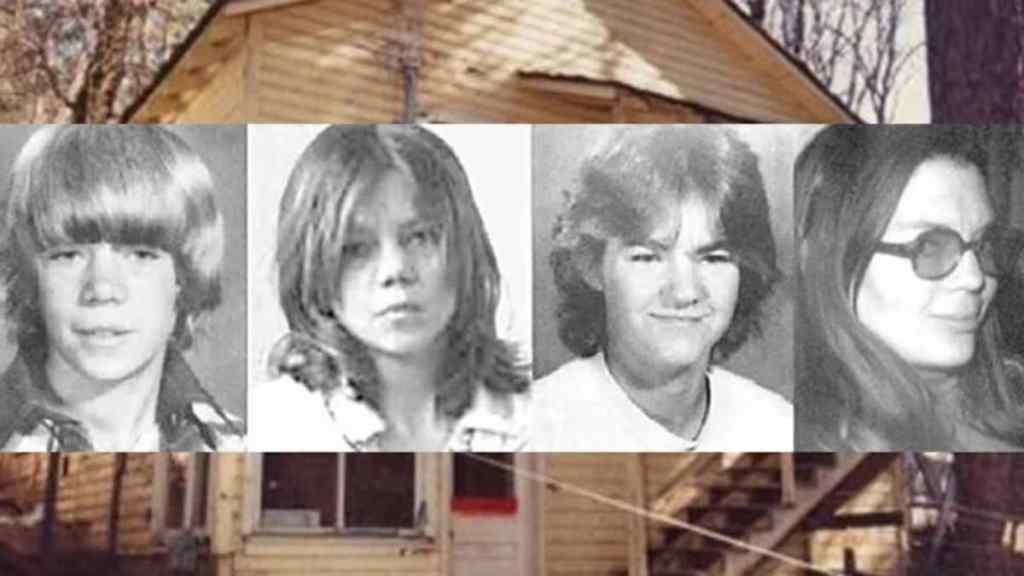
In July 1979, Glenna Susan “Sue” Sharp, along with her five children, left her home in Connecticut after separating from her abusive husband, James Sharp. They relocated to northern California, where Sue’s brother Don lived. Upon arriving in California, she rented a small trailer formerly occupied by her brother at the Claremont Trailer Village in Quincy. Eager to get her life together and find a way to support herself and her children, Sue began taking typing classes and working a part-time job at the Quincy Elks Lodge. The nearby town of Keddie, formerly a popular family resort, had suffered financial setbacks in recent years and had since been converted into low-income housing. As a result, the family was able to move into Cabin 28 the following fall. Though they now lived in a small, isolated town with only one road going in and out. The house was much larger than the trailer and had become available when Plumas County’s sheriff Sylvester Douglas Thomas vacated the property. She resided there with her 15-year-old son John, 14-year-old daughter Sheila, 12-year-old daughter and two younger sons, Rick (age 10) and Greg (age 5).
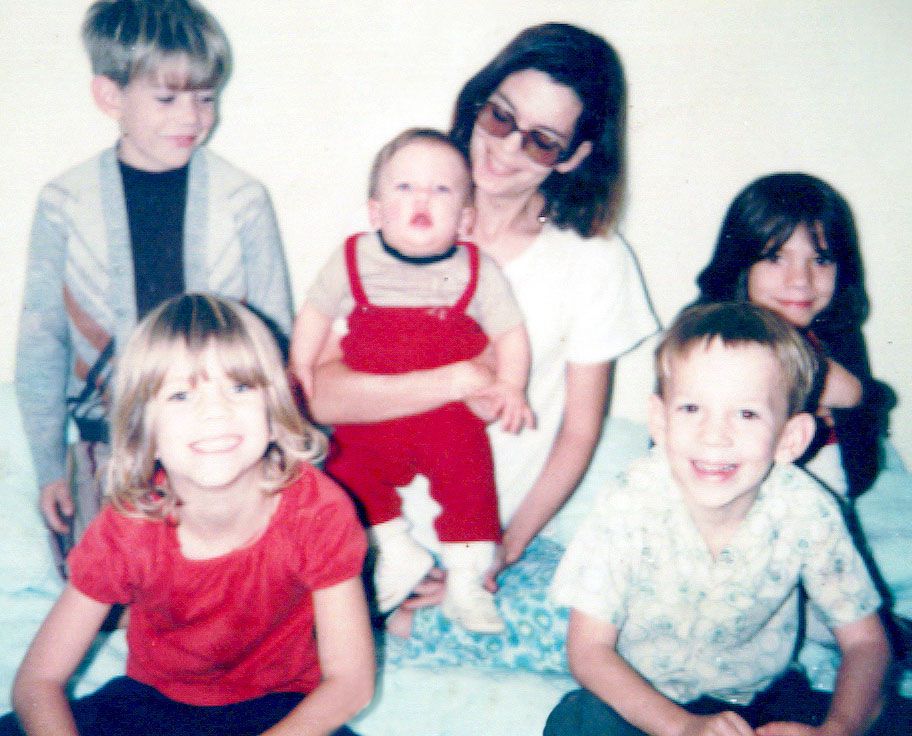
On April 11, 1981, at around 11:30 a.m., Sue, Sheila and Greg drove from the residence of their friends, the Meeks family, to retrieve Rick, who was attending baseball tryouts at Gansner Field in Quincy. They happened upon John and his friend Dana Hall Wingate hitchhiking at the mouth of the canyon from Quincy to Keddie and then drove them about 6 miles away to Keddie. Two hours later, at around 3:30 p.m., John and Dana hitchhiked back to Quincy, where they may have had plans to visit friends. Around this time, the boys were seen in the city’s downtown area.
That same evening, Sheila had plans to spend the night with the Seabolt family, who lived in adjacent Cabin 27, while Sue remained at home with Rick, Greg and the boys’ young friend Justin Smartt. Sheila departed Cabin 28 shortly after 8:00 p.m. to sleep at the Seabolts’. Tina, who had been watching television at the Seabolt residence, returned to Cabin 28 after asking what time it was at 9:30. p.m.
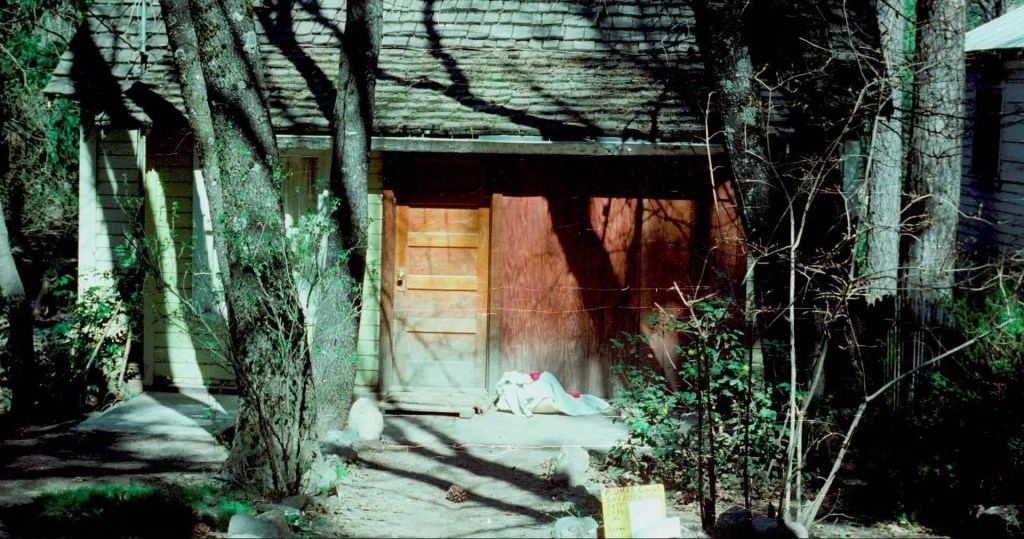
At approximately 8:00 a.m. on the morning of April 12, Sheila returned to Cabin 28 and discovered the the bloody, bound and gagged, dead bodies of Sue, John and Dana in the house’s living room. All three had been bound with medical tape and electrical cords. Alarmingly Tina was absent from the home (her bedding was stained with blood, but there was no sign of the 12-year-old anywhere), while the three younger children — Rick, Greg, and Justin — were found physically unharmed in an adjacent bedroom. There was blood on the walls, the doors, the ceiling, and even on the porch railing, as well as what appeared to be knife marks on the walls.
Upon discovering the scene, Sheila rushed back to the Seabolts’ house, and Jamie Seabolt retrieved Rick, Greg and Justin through the bedroom window. He later admitted to having briefly entered the home through the back door to see if anyone was still alive, potentially contaminating evidence in the process. The murders of Sue, John and Dana were especially vicious: two bloodied knives and one hammer were found at the scene. Blood-spatter evidence from inside the house indicated that the murders had all taken place in the living room.
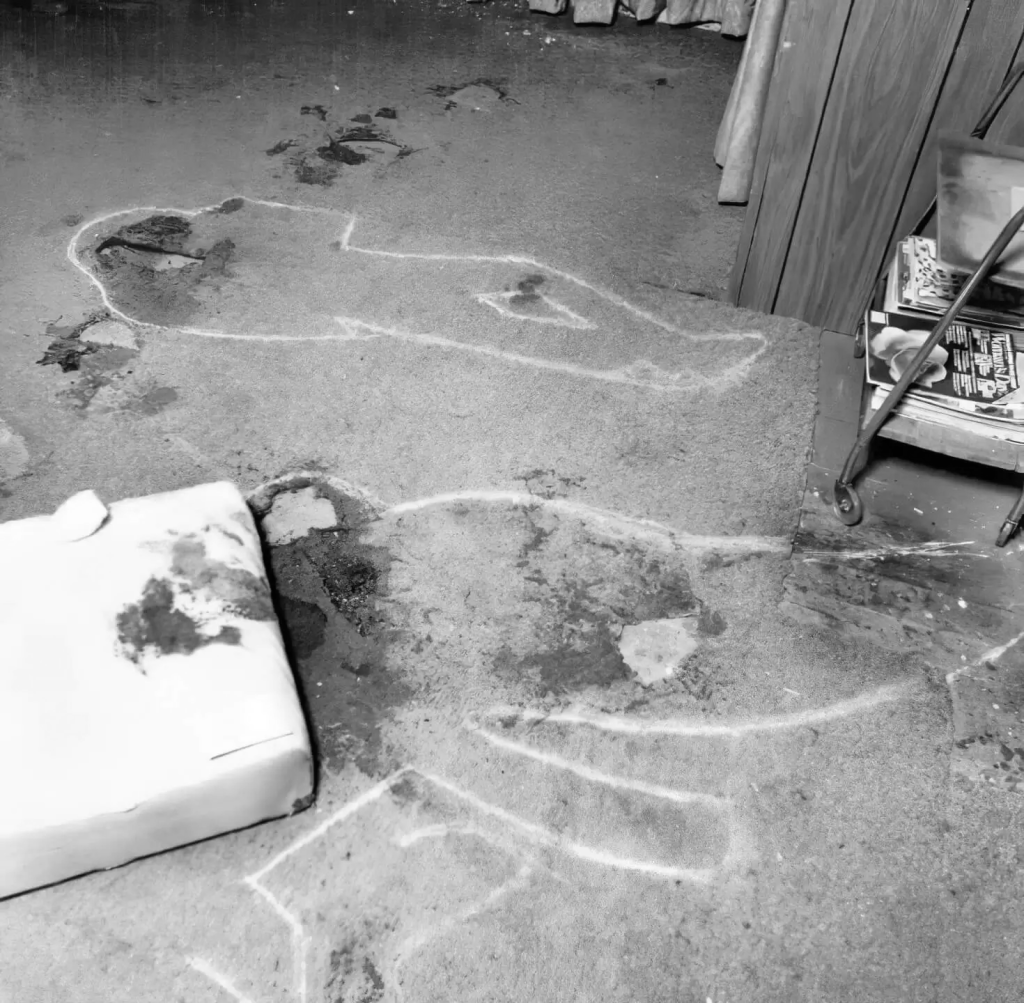
Sue was discovered lying on her side near the living room sofa, nude from the waist down and gagged with a blue bandana and her own underwear, which had been secured with tape. She had been stabbed in the chest and her throat was stabbed horizontally, the wound passing through her larynx and nicking her spine, and on the side of her head was an imprint matching the butt of a Daisy 880 Powerline BB/pellet rifle. John’s throat was slashed. Dana had multiple head injuries and had been manually strangled to death. John and Dana suffered blunt-force trauma to their heads caused by one or more hammers. Autopsies determined that Sue and John died from the knife wounds and blunt-force trauma, and Dana died by asphyxiation. Investigators believed it would have taken at least two individuals to subdue three people. However, despite the bloody, chaotic scene, the killers somehow managed to leave no DNA evidence behind. Nor was there forensic evidence to suggest that Tina had been among the victims that night. Blood-spatter pattern analysis indicated that all three bodies had been moved post-mortem.
Sheila and the Seabolt family heard no commotion during the night; a couple living in nearby house Cabin 16 was awakened at 1:15 a.m. by what sounded like muffled screaming. Justin’s stepfather Martin Smartt, a neighbour, claimed that a claw hammer had inexplicably gone missing from his home. In addition to interviewing the Smartts, detectives interviewed numerous other locals and neighbours; several, including members of the Seabolt family, recalled seeing a green van parked at the Sharps’ house at around 9:00 p.m. while others later spotted a brown Datsun that appeared to have a flat tire. Unfortunately, these leads didn’t help with the case. The police found no signs of forced entry but they discovered that a toolbox was missing from the home. A second hammer, believed to have been another murder weapon, was gone from the scene as well. Justin offered conflicting stories of the evening and stated that he had dreamed details of the murders. In his later account of events, told under hypnosis, he claimed to have seen Sue with two men. Based on Justin’s descriptions, composite sketches of the two unknown men were produced by Harlan Embry, a man with no artistic ability and no training in forensic sketching.
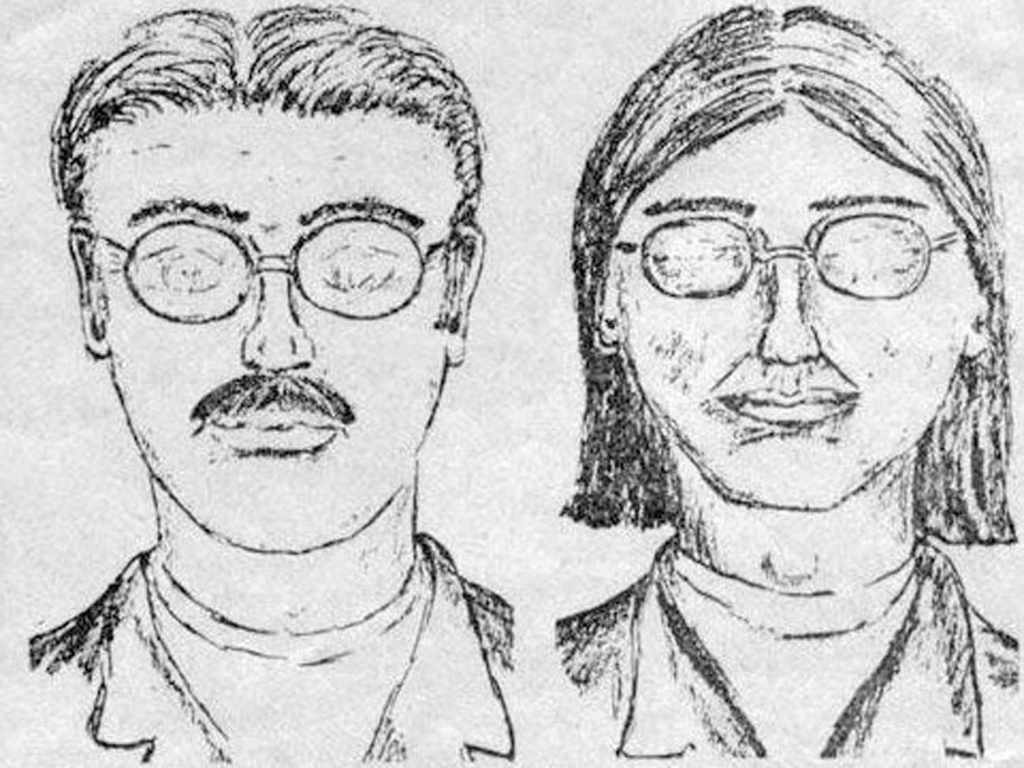
It was never explained why, with access to the Justice Department’s and the Federal Bureau of Investigation’s (FBI) top forensic artists, law enforcement chose to use an amateur who sometimes volunteered to help local police. In press releases accompanying the sketches, the suspects were described as in their late 20s to early 30s; one stood between 5 feet 11 inches to 6 feet 2 inches tall with dark-blonde hair, and the other between 5 feet 6 inches and 5 feet 10 inches with black, greased hair. Both wore gold-framed sunglasses. Rumours regarding the crimes being ritualistic or motivated by drug trafficking were dismissed by Plumas County sheriff Doug Thomas, who stated in the week following the murders that neither drug paraphernalia nor illegal drugs were found in the home.
An early suspect in the investigation was neighbour Martin Smartt, Justin’s stepfather. Martin and his wife Marilyn both took the same typing class as Sue Sharp and had become friendly with her. However, Martin allegedly had anger issues and Marilyn confided in Sue that he was physically abusive to her. A domestic violence survivor herself, Sue reportedly advised Marilyn to leave her husband. Some have speculated that Martin may have killed Sue for revenge, mistakenly believing that she was responsible for breaking up his marriage. One of Martin’s friends, John “Bo” Boubede, a veteran suffering from PTSD, had been living in the Smartt home for some time. Bo was said to have had a crush on Sue, but was rejected by her on two different occasions in the short time they knew each other. Bo, who allegedly had mob ties back in Chicago, told police that he and Martin had been at a bar from 9:30 to 10 p.m. that night. Later, however, he changed his story and claimed that they had been there around midnight. The investigation also turned up evidence suggesting that Martin and Sue had been having an affair.

Early on in the case, Martin volunteered the information that a claw hammer was stolen from his garage. This revelation came before it was public knowledge that two of the murder weapons were hammers. Many years later, in 2016, a claw hammer matching his description would be found in a local pond. Justin, Martin’s stepson, came forward shortly after the murders to say he had been having nightmares about what happened that night, seemingly indicating that he witnessed parts of what occurred after all. Under hypnosis, he gave an account of hearing strange noises that night and finding Sue in the living room with two unidentified men. John and Dana, according to Justin’s account, tried to help Sue and fought the two men.
Following the breakdown of his marriage, Martin moved to Reno, Nevada, where he began seeing a counselor. This counselor came forward in 1981 to state that Martin confessed to killing both Sue and Tina. His motive was allegedly revenge for Sue convincing his wife to leave him. He refused to claim responsibility for the murders of the two boys, however. The Department of Justice dismissed this claim as hearsay and didn’t look into it any further. A letter Martin wrote to Marilyn also drew attention because of one line in particular:
“I’ve paid the price of your love & now that I’ve bought it with four people’s lives you tell me we are through.”

On its own, the sentence seemed pretty incriminating. But when read in the context of the three-page letter, it seemed that Martin was not actually referring to murder but rather his regret over sacrificing too much time with his own four children (from a previous marriage) in order to be with Marilyn and her children. In a 2016 interview, Plumas County special investigator Mike Gamberg stated that the letter was “overlooked” in the initial investigation and was never admitted as evidence. He later criticized the quality of the initial investigation, saying: “You could take someone just coming out of the academy, and they’d have done a better job.” A counselor whom Smartt regularly visited also alleged that he had admitted to the murders of Sue and Tina but claimed, “I didn’t have anything to do with [the boys].” He allegedly told the counselor that Tina was killed to prevent her from identifying him, as she had “witnessed the whole thing.”
Tina’s disappearance was initially investigated by the FBI as a possible abduction, although it was reported on April 29, 1981, that the FBI had “backed off” the search as the California State Department of Justice was doing an “adequate job” and “made the FBI’s presence unnecessary.” A grid-pattern search of the area covering a 5-mile radius around the house was conducted with police canines, but the efforts were fruitless.
On April 11, 1984, a bottle collector discovered the cranium portion of a human skull and part of a mandible at Camp 18 near Feather Falls in neighboring Butte County, roughly 5 miles from Feather Falls, CA. The remains were confirmed by a forensic pathologist to be those of Tina in June 1984. Shortly after announcing the discovery, the Butte County sheriff’s office received an anonymous call that identified the remains as belonging to Tina, but the call was not documented. The call, which investigators do not believe was random, occurred on the three-year anniversary of the murders: A tape containing a recording of the call was found at the bottom of an evidence box at some point after 2013 by a deputy who was assigned to the case:
Caller: “Hello I was watching the news and they were talking about the skull they found at the Feather Falls and they asked for any help.”
Dispatcher: “Uh-huh.”
Caller: “And I was just wondering if they thought of the murder up in Keddie up in Plumas County a couple years ago where a 12-year-old girl was never found?”
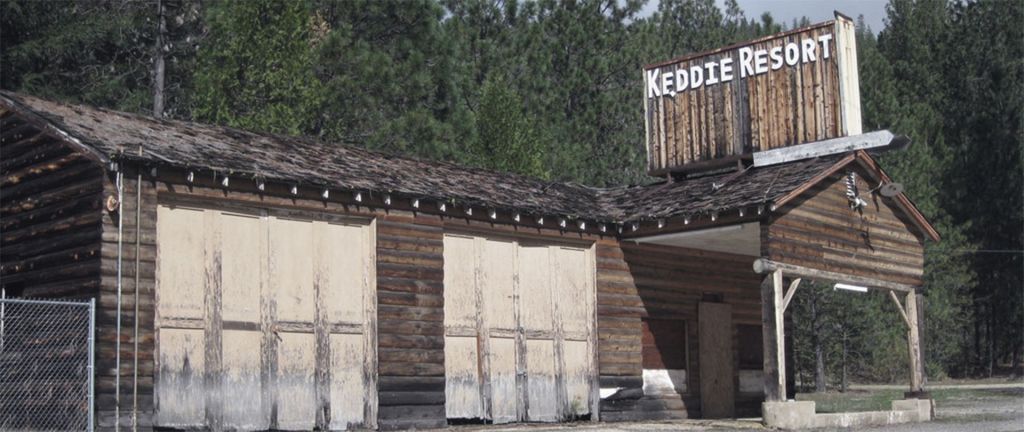
The caller’s identity remains unknown to this day. In a 2008 documentary, Marilyn asserted her belief that both Martin and Bo were responsible for the killings. She claimed she found Tina’s bloody jacket in the basement after the murders and quickly turned it over to the police. But there is no record of this happening. She also stated that Martin had hated John Sharp. Martin Smartt and Bo Boubede passed away, in 2000 and 1988, respectively, but in 2018, DNA from a piece of tape found at the crime scene was linked to a living, unidentified suspect. The Keddie Resort fell into disrepair over the decades and Cabin 28 was demolished in 2004.

Special Investigator Mike Gamberg and former Plumus County Sheriff Greg Hagwood reopened the case in 2013 and later stated that the Keddie case was solvable and that during the initial investigation, both the DOJ and local deputies made “crucial mistakes.” This included evidence that wasn’t logged, tampering with the crime scene, and leads that weren’t properly investigated. Specifically, Gamberg and Hagwood believe the tape of the anonymous caller was covered up to allow a suspect to get out of town. The victims’ families, including Sheila Sharp, also believe there was a coverup.
“I was told the suspects were told to get out of town, so to me that means it was covered up,” Sharp said.
For Gamberg, the case was personal, as he knew all the victims and had given martial arts lessons to the boys. Hagwood, who was 15 at the time, also knew the victims. They believe there are at least two people still alive who were accessories after the fact. One of them is probably the anonymous caller, who seemed to have special knowledge about what happened to Tina Sharp.
“It’s my belief that there were more than two people who were involved in the totality of the crime—the disposal of the evidence and the abduction of the little girl,” said Hagwood. “We’re convinced that there are a handful of people that fit those roles who are still alive.”

John Boubede, another suspect who was in the same neighboring cabin as Smartt, allegedly had ties to organized crime in Chicago. He died in 1988. On March 24, 2016, a hammer matching the description of the one Smartt had claimed to have lost was discovered in a local pond and taken into evidence by Plumas County special investigator Mike Gamberg. Plumas County sheriff Greg Hagwood, who was 16 years old at the time of the murders and knew the Sharp family, stated: “the location it was found… It would have been intentionally put there. It would not have been accidentally misplaced.” Gamberg also stated that at that time, six potential suspects were being examined. In April 2018, Gamberg stated that DNA evidence recovered from a piece of tape at the crime scene matched that of a known living suspect.
Gamberg and Hagwood remain determined to solve the Keddie murders and give closure to the community of Keddie, which has been haunted by the quadruple homicide for over four decades. They say they are closer than ever to cracking the case. In the last few years, investigators tested the hammer and knife for possible DNA evidence and the FBI examined the anonymous call for a potential voice match.
“They better batten down the hatches because we’re coming. We’re continuing with the investigation and we’re doing interviews, and we have several persons of interest.” – Special Investigator Mike Gamberg talking about the living suspects.
If you want to watch a documentary on the Keddie Cabin Murders then just check out the video below:
 Raz's Midnight Macabre