
London After Midnight is a lost 1927 American silent mystery horror film.
Despite being released nearly 100 years ago in 1927, this is still a much talked about film.
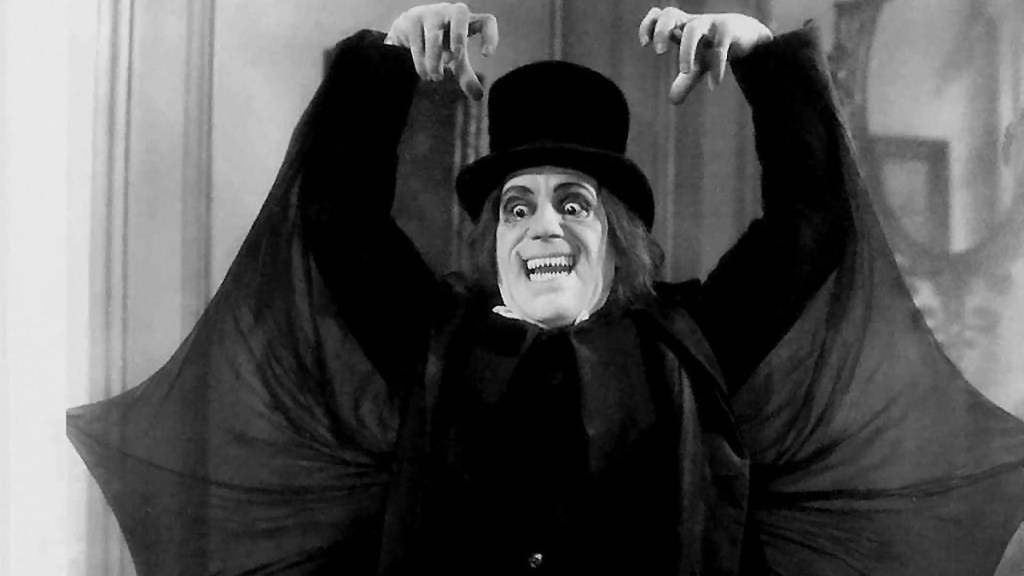
“London After Midnight” is one of the most infamous lost movies, the 1927 silent mystery Horror film that was directed and co-produced by Tod Browning and starring Lon Chaney, a truly iconic pairing in the Horror genre. The film was based on a short story “The Hypnotist”, which was also written by Browning, though there’s no evidence of this short story (though a novelization of the film was written and published in 1928 by Marie Coolidge-Rask).
Waldemar Young adapted the story for screen, he’d previously worked with Browning on “The Unholy Three” and “The Unknown”, as the scenario writer. Young was previously employed as a journalist in San Francisco, during which time he covered several famous murder investigations, a distinction which saw him lauded as knowing “mystery from actual experience.”
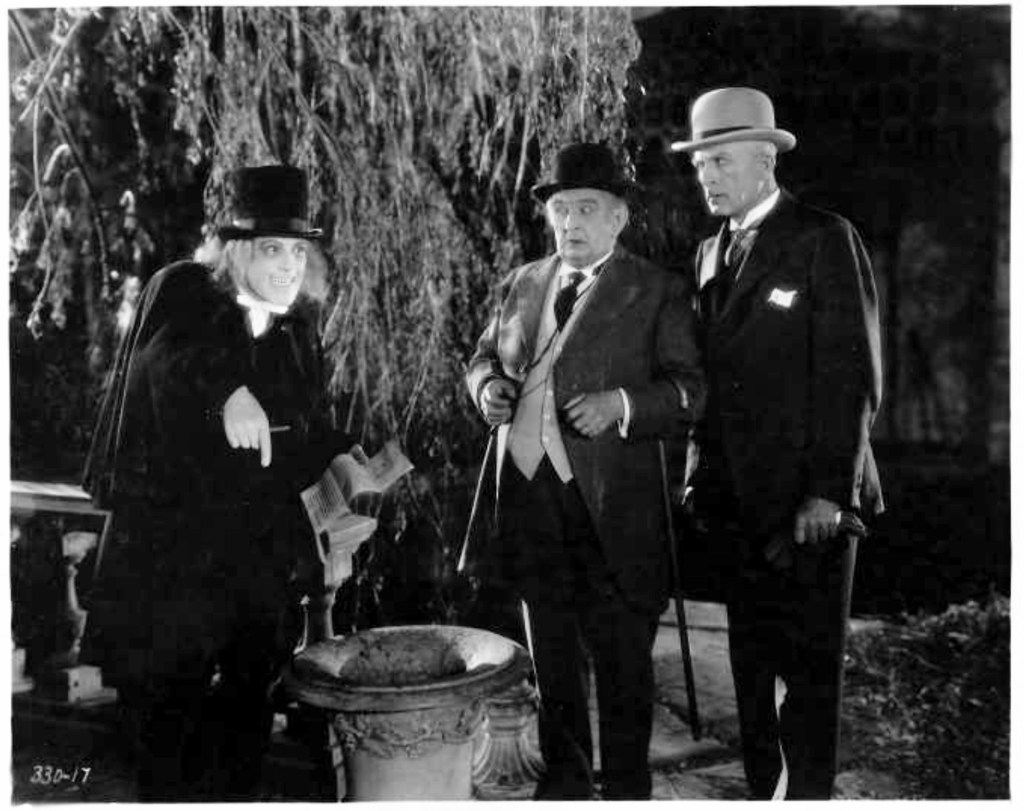
The films story starts with ‘Roger Balfour’ being found dead in his London home, and his death is declared a suicide by Burke, a representative of Scotland Yard. Five years later, Hamlin residents witness strange lights in the Balfour mansion, two vampiric figures. ‘Sir James’, a Baronet, and his family witness the new tenants, who bear the same signature as ‘Balfour’.
‘Burke’ and ‘Sir James’ exhume ‘Balfour’s tomb, but he remains skeptical about the existence of the undead. After a series of events, the events leading up to ‘Balfour’s death are recreated and re-enacted, with ‘Sir James’ attempting to marry Balfour’s daughter, ‘Lucille’, against her will. ‘Burke’ identifies ‘Sir James’ as the killer.
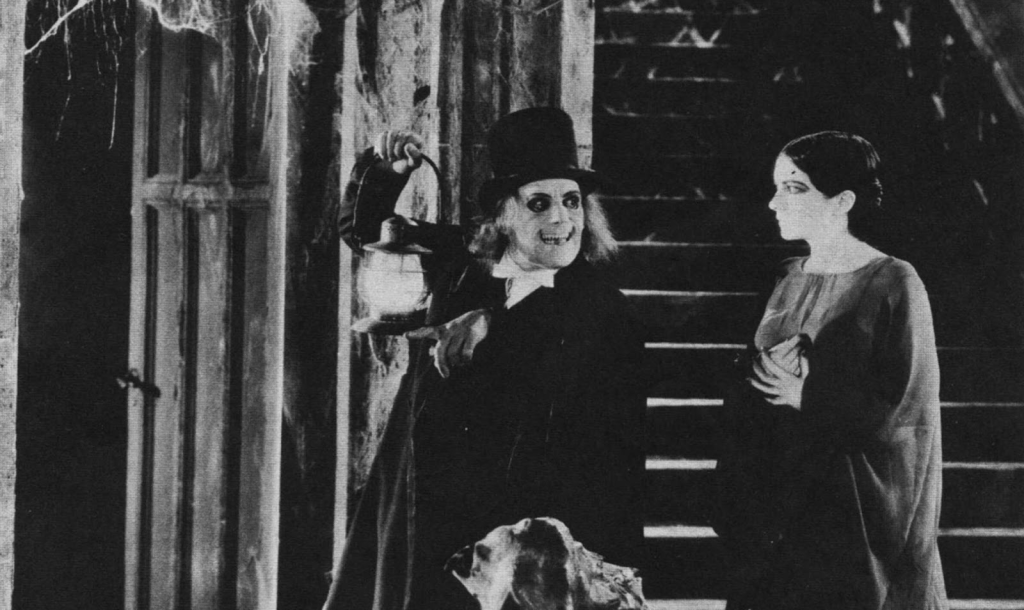
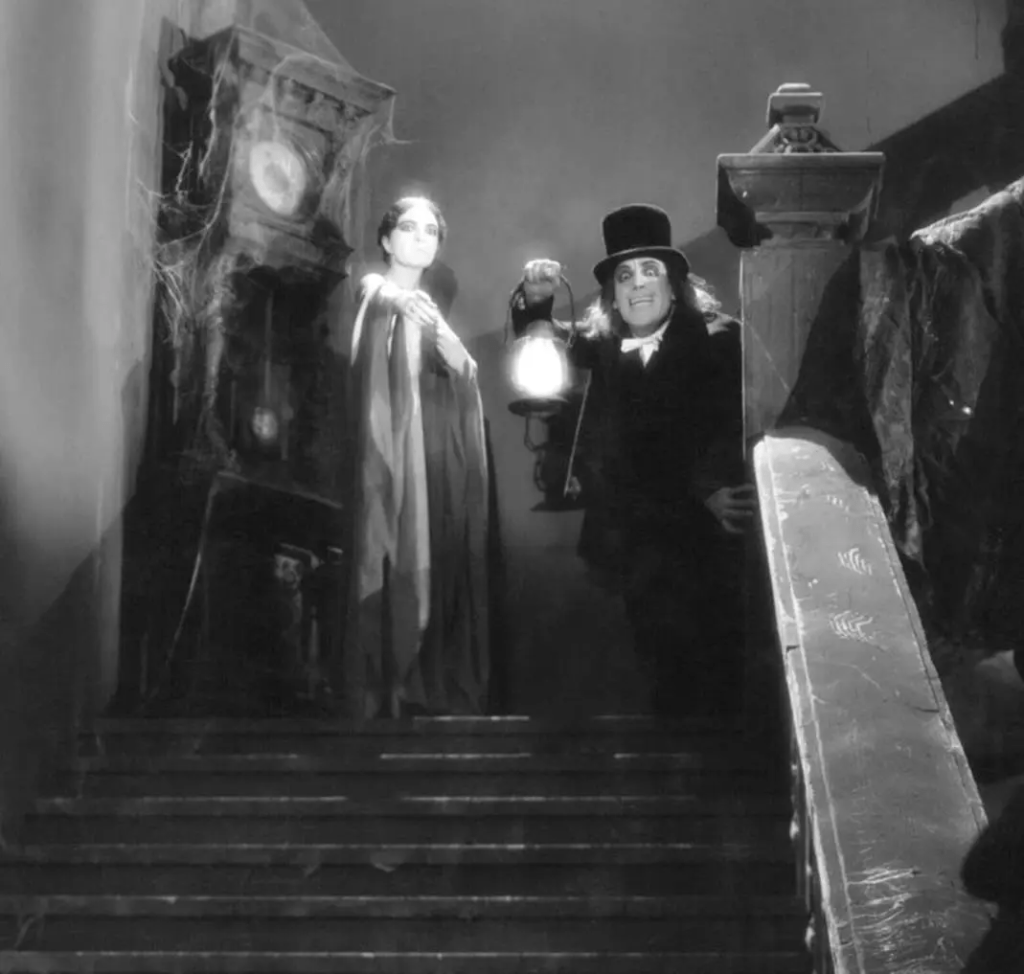
Lon Chaney’s makeup for the film included sharpened teeth and the hypnotic eye effect, achieved with special wire fittings which he wore like monocles. Based on surviving accounts, he purposefully gave the ‘vampire’ character an absurd quality, because it was the film’s Scotland Yard detective character, also played by Chaney.
The film was actually released and distributed by Metro-Goldwyn-Mayer (MGM), “London After Midnight” cost $151,666 to produce, and grossed $1,004,000 (equivalent to around $18,173,939 today). A big success, I’m sure you’d agree. A bit of movie trivia for you, Chaney’s real-life make-up case could be seen in the last scene of the film sitting on a table, the only time it ever appeared in a film.
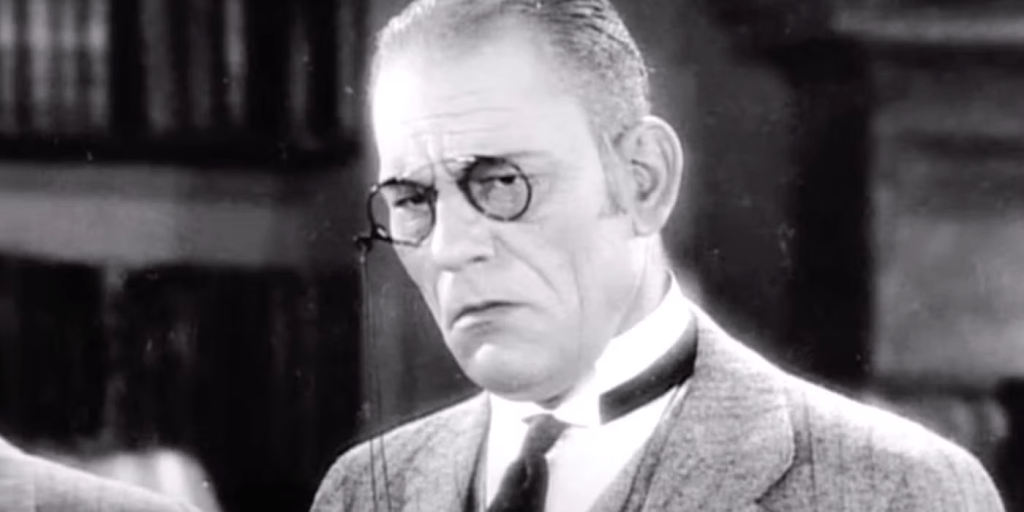
It actually became the most successful collaborative film between Chaney and Browning, but it received mixed reviews from critics. The storyline, called “somewhat incoherent” by The New York Times and “nonsensical” by Harrison’s Reports, was a common point of criticism. “Mr. Chaney’s makeup is at times hideous enough to make one sick in the stomach. It should please the morbid. Just like the last three or four pictures with this star – gruesome!” Nonetheless, the commercial success of “London After Midnight” saw Metro-Goldwyn-Mayer renew Tod Browning’s directorial contract.
There were positive reviews too, The Film Daily, called it “a story certain to disturb the nervous system of the more sensitive picture patrons. Thrills and weird doings in profusion. Probably a trifle too spooky for the timid soul. If they don’t get the creeps from flashes of grimy bats swooping around, cobweb-bedecked mystery chambers and the grotesque inhabitants of the haunted house, then they’ve passed the third degree”. The Oregonian praised the film as “as nerve-wringing a piece of screen fiction as has been seen in these parts for many moons,” noting Chaney’s makeup as “bizarre” and “striking”.
And that was that, people carried on with their lives and careers. Browning and Chaney carried on working together for many more projects over the years, including films such as “The Unknown”, “The Show”, “West Of Zanzibar”, “The Big City” and more. That was until Lon Chaney passed away on 26 August 1930, aged 47.
In 1935 Browning decided he wanted to remake the film, this time as a talkie. The title was changed to “Mark Of The Vampire”, this time starring Bela Lugosi. Lugosi and Browning had already previously worked together on Brownings first sound film, “The Thirteenth Chair” and the now iconic first ever Horror talkie “Dracula”. He then retired from film making altogether in 1942, aged 62. His wife, Alice Wilson, died in 1944, at which point he withdrew from society before he sadly passed away all alone in 1962 aged 82.
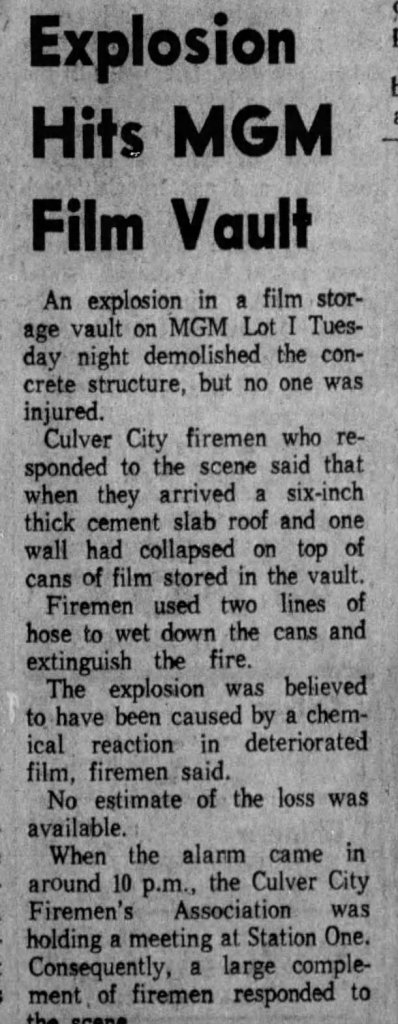
Years later, on August 10, 1965 tragedy struck. MGM’s film vault suffered a horrible fire, it was said to be caused by an electrical short that ignited flammable stored nitrate film. The initial explosion reportedly killed at least one person, and the resulting fire destroyed the entire contents of the vault, which included archived prints of silent and early sound films produced by MGM and its predecessors. The only known copies of hundreds of films were destroyed, including the only known print of “London After Midnight” making it one of the most sought-after lost films.
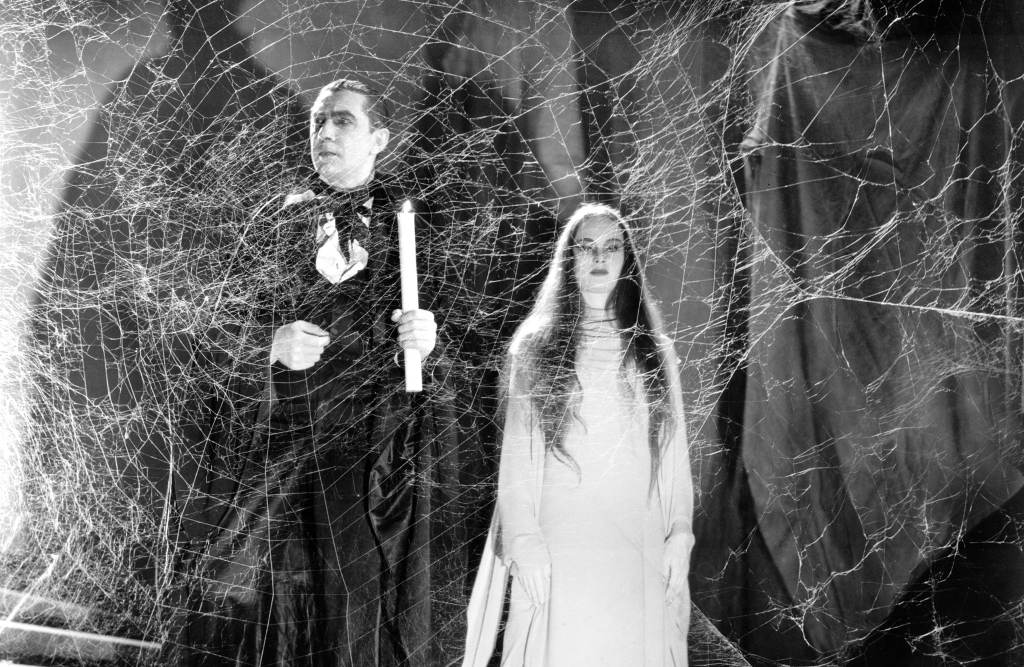
Film historians William K. Everson and David Bradley claim they saw the film in the early 1950s, and an MGM vault inventory from 1955 shows the print being stored in Vault #7. Historian Jon C. Mirsalis has stated, “Despite all the mythology and excitement over the film, all indications are that it would be a disappointment if uncovered today. Both Everson and Bradley admit that the film was inferior to Mark of the Vampire. The critics of the time were likewise lukewarm, and even Chaney’s performance got less than the usual enthusiastic reviews. The eerie sets, and Chaney’s stunning vampire make-up, make for intriguing still photographs, but these scenes account for only a small portion of the film, the rest of the footage being devoted to Polly Moran’s comic relief, and talkie passages between detective Chaney and Walthall. Perhaps it is a film that is viewed with more reverence than it deserves simply because it is no longer available for study.”
Production photo stills, lobby cards, a movie poster, and an original script is all that survives. In 2014, the only contemporary poster known to exist for the film was sold in Dallas, Texas, to an anonymous bidder for $478,000, making it the most valuable movie poster ever sold at public auction. This bidder was later revealed to be Metallica guitarist Kirk Hammett. The poster is in his displayed collection at the Royal Ontario Museum in Toronto. (The 1932 film The Mummy held the previous record for a poster’s sale at public auction, selling for more than $453,000 in 1997.)
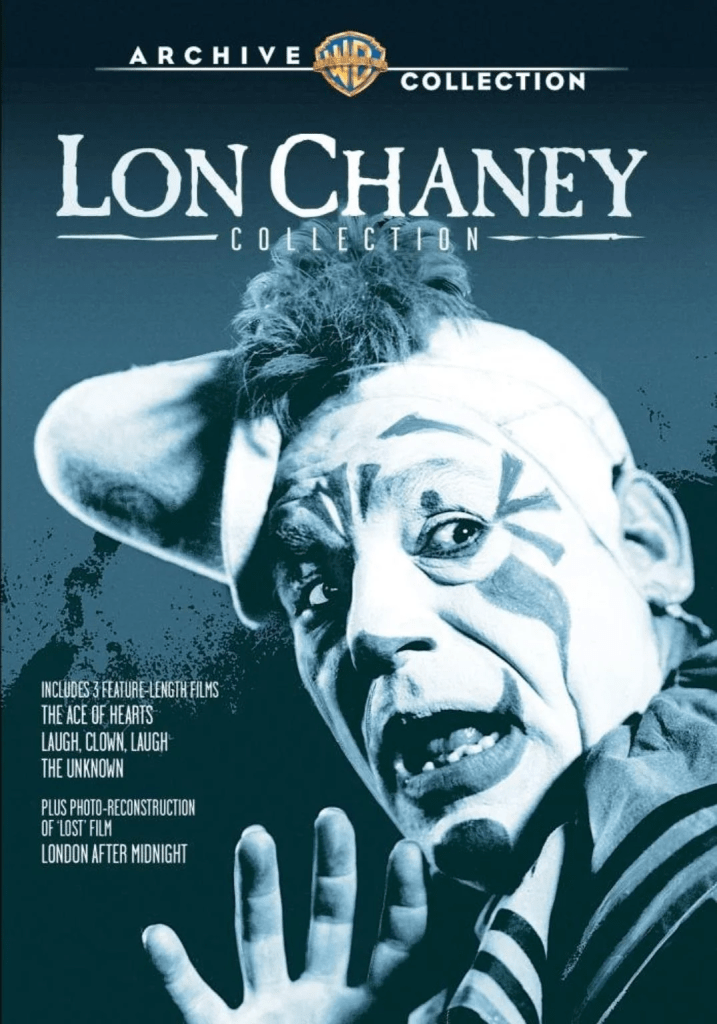
In 1985, Philip J. Riley published the first photo reconstruction of the film’s plot compiled of all the surviving production stills at MGM. In 2002, Turner Classic Movies commissioned restoration producer/expert Rick Schmidlin to produce a 45-minute reconstruction of the famous sought-after lost film, using stills photographs and a surviving original script. A year later, this reconstruction was included “The Lon Chaney Collection” DVD set. Sadly Approximately 102 of the 157 films made by Chaney are currently classified as lost films. A number of the remaining 55 films exist only in extremely truncated form or suffer from severe decomposition.
In 2016, Thomas Mann published the book, “London After Midnight: A New Reconstruction Based on Contemporary Sources”, upon the discovery of a previously-unknown 11,000-word Boy’s Cinema magazine published in 1928. A second edition was published in 2018 upon the discovery of an alternative French novelization for the film. In 2022, a new study by historian Daniel Titley, titled “London After Midnight: The Lost Film”, was released in conjunction with the film’s 95th anniversary, in which nitrate elements from the lost film itself were presented for the first time, along with many other new insights published by Keyreads, and serving as the most milestone discovery of the film to date.
In September 2023, it was announced that a full-cast audio drama would be released, adapted from the original film script. The cast includes Art Malik as Detective Burke, and Dan Starkey as Sir James Hamlin. The production was released the following month through Bandcamp and as part of the fiction podcast Midnight Matinees. The audio drama received overwhelmingly positive reviews.
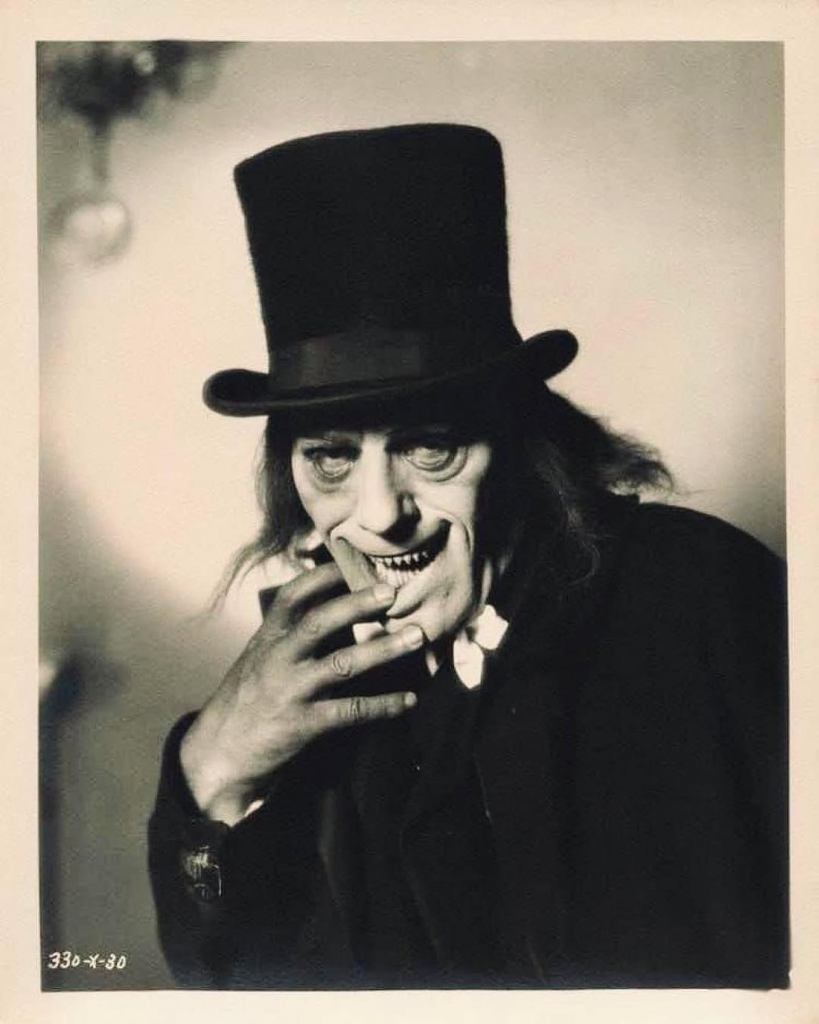
Even though the film is still lost, as of 2025, there are still efforts to try and rediscover the movie. People are hanging on to hope that a print may be found out there, somewhere, anywhere. It’s crazy to think how iconic this film has become, but would it have been this way if it han’td become what is probably the most sought after lost film?
 Raz's Midnight Macabre
Not bein’ able to sssee et @ all–no matter what anyone thinksss of et–remindsss usss that you don’t know how good sssomething esss ’til et’sss gone.
LikeLike
100%
LikeLike